
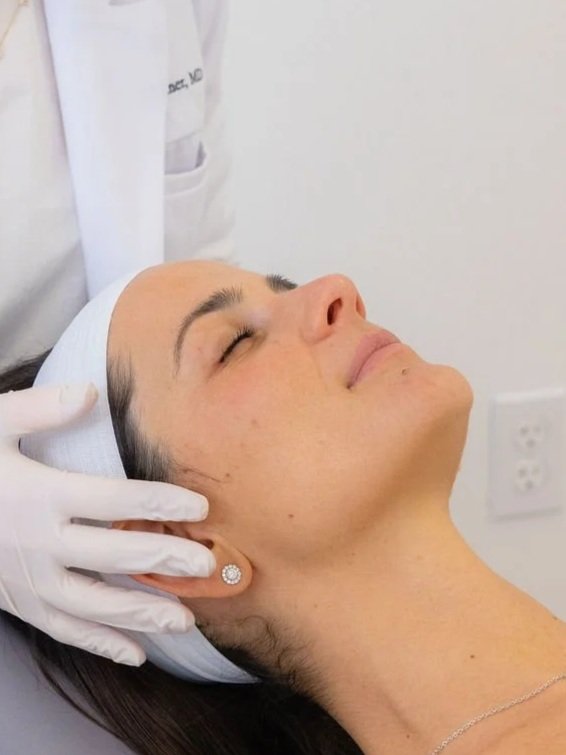
Melasma
A TARGETED PLAN FOR MELASMA THAT GOES BEYOND SUN PROTECTION.
Melasma is one of the most frequently misdiagnosed and mismanaged pigment conditions. Melasma has a complex etiology, with few effective treatment options, and flares/relapses are the source of great frustration. Melasma is not caused by sun exposure alone, but can be driven by hormones, heat and visible light acting on pigment-producing cells that sit deeper in the skin, which is why it requires a very specific treatment strategy.
OUR APPROACH
Melasma also isn't one uniform patch of discoloration. Pigment can sit near the skin's surface or deeper within it, and that depth determines how it responds to treatment. Whether melasma appears during pregnancy, starts with hormonal birth control, or has no clear trigger at all, our board-certified dermatologists provide melasma treatment in Greenwich, CT built around your skin's specific pattern. Our board-certified dermatologists build a treatment plan around your skin, combining daily broad-spectrum protection, prescription topicals, oral medication where appropriate, and gentle in-office treatment to accelerate and maintain results.
TREATMENT RECOMMENDATIONS
Topical Medications
Oral Tranexamic Acid
Chemical Peels
FAQS
Does melasma ever fully go away?
For some patients, particularly when their melasma starts with pregnancy or birth control, it fades substantially once the hormonal trigger resolves. For others, it's a chronic condition that's managed rather than cured, with periods of flare and remission tied to sun, heat and hormones.
Can I still get laser treatment if I have melasma?
Yes, with the right device and the right hands. Gentle, non-ablative options like Clear + Brilliant Permea are considered safe for melasma when a qualified provider selects the correct settings and treatment plan. Aggressive or high-heat devices carry risk of worsening melasma.
Is melasma the same as regular hyperpigmentation?
No. Melasma is a distinct pigmentary disorder, influenced by hormonal and vascular factors, with a distinct microscopic pattern. Different types of pigmentation can coexist in the same patient, and can look similar, which is why an accurate diagnosis is important for the right treatment plan.
How long until results appear?
Most patients see meaningful change over three to six months of consistent treatment, with continued improvement. Melasma responds best to patience and consistency rather than intensity.